
TEAM

Auctionomics’ team comprises some of the industry’s top market-design and auction-implementation experts, so it’s no surprise that our team members have been involved in the most successful and innovative auction solutions in the telecommunications and energy industries.


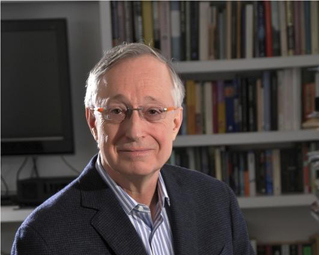
Paul Milgrom, co-founder and chairman of the Board of Directors

Paul MilgromAuthor of Putting Auction Theory to Work,” published by Cambridge University Press in 2004.

“Paul Milgrom has combined fundamental work in economic theory and, in particular, the theory of auctions, with extensive practical participation in the auctions of the electromagnetic spectrum. This book is a brilliant synthesis of his own and others’ contributions to the field. The impact of practical problems on the need for theory is thoroughly exemplified. The exposition of the theory has that complete ease only achievable through complete mastery and intense work.” Kenneth Arrow, Nobel Laureate, Stanford University.

A decade ago, Milgrom’s expanded his role from that of an academic game theorist when he became the main architect of the Federal Communications Commission’s original US spectrum auction design; it was his “activity rule” that made feasible the implementation of the “simultaneous multiple round” (SMR) auction. Milgrom’s role in creating this design is celebrated in accounts by the National Science Foundation (“America’s Investment in the Future”), which identifies it as one of the main practical contributions of 20th century research in micro-economic theory, and by the prestigious National Academy of Sciences (“Beyond Discovery”). The SMR design has been copied and adapted worldwide for auctions of hundreds of billions of dollars’ worth of radio spectrum, electricity, natural gas, etc.

The next of Milgrom’s major innovations was the “core-selecting package auction,” developed with collaborator Professor Bob Day and incorporated in 2007 into the U.K.’s spectrum auction mechanism. In 2008, the UK further revised their auction rules to include the patent-pending “revealed preference activity rule,” co-invented by Milgrom and his collaborator Professor Lawrence Ausubel.

Most recently, Milgrom has invented the “Milgrom assignment auction,” the proprietary design that makes Auctionomics unique. Like Milgrom’s original SMR mechanism, this design can address especially complex situations involving complementarity, but the Milgrom assignment auction runs instantaneously. Compared to the original SMR auction, which require many hours, days, or weeks, the new design reduces transaction costs and increases precision in setting prices. Most exciting, perhaps, is the design’s potential for entirely new applications. It can be adapted into a non-price bidding mechanism to place students efficiently and fairly into college courses, or to reallocate airline slots in the event of bad weather at a crowed airport.

And Milgrom’s theoretical approach is tempered by wide consulting experience on high- profile auction designs. He has advised regulators in the US, UK, Canada, Australia, Germany, and Mexico, on the implementation and improvement of the original SMR design, and is currently engaged by the US Treasury to advise on auctions of mortgage-backed securities. At Google, Milgrom advised CEO Eric Schmidt and co-founder Sergey Brin on the design of their IPO. At Yahoo!, he advised on the design of markets to sell on-line advertising, and at Microsoft Networks on auctions related to the placement of search advertising.
Milgrom has also had notable success leading teams of consultants to advise bidders in major auctions, including the team that guided Comcast and its consortium SpectrumCo, in US Auction 66, to the most exceptional performance in US-spectrum-auction history. SpectrumCo saved nearly $1.2 billion on its spectrum license purchases based on the prices paid by other large bidders – such as T-Mobile and Verizon – for comparable spectrum acquired at the same time in the same auction. SpectrumCo’s tactics included a $750 million jump-bid – the largest in the history of US spectrum auctions and a move that prompted the FCC to change the auction rules. His unorthodox strategy will be described in more detail in the forthcoming article “Winning Play in a Spectrum Auction.”

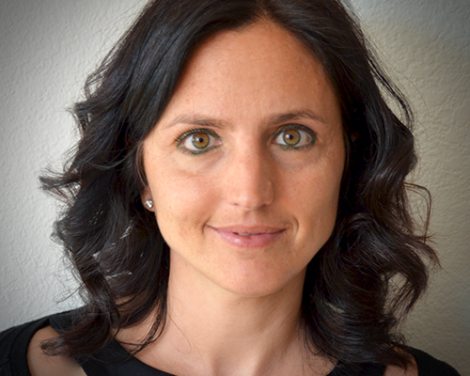
Silvia Console Battilana, co-founder and CEO


Dr. Console Battilana is a young entrepreneur and economist specializing in game theory and interest groups. She holds a Ph.D. from the Stanford Economics department and has taught graduate students as a Visiting Professor at Bocconi University, as well as speaking at major US universities such as Harvard, Caltech and Berkeley, as well as universities in Turkey, China, the United Arab Emirates, Pakistan, Italy, Messico and Spain. Her co-authors include Harvard Professor Kenneth Shepsle and Stanford Professor Douglas Bernheim, and her entrepreneurial experience began during graduate school, when she successfully started a C-corporation in the higher education industry. Silvia is also very active in the Silicon Valley, organizing networking events that bring together experienced entrepreneurs, venture capitalists, engineers, and start-up rookies.

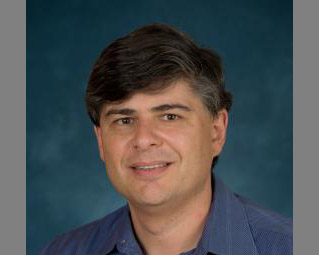
Greg Rosston, affiliate

Greg Rosston
Rosston is Deputy Director, Stanford Institute for Economic Policy Research
Greg Rosston is a Research Fellow at SIEPR and Visiting Lecturer in Economics at Stanford University. His research has focused on industrial organization, antitrust and regulation. He has written numerous articles on competition in local telecommunications, implementation of the Telecommunications Act of 1996, auctions and spectrum policy.
He has also co-edited two books, including Interconnection and the Internet: Selected Papers from the 1996 Telecommunications Policy Research Conference.
At Stanford, he has taught Regulation and Antitrust in the economics department and a seminar for seniors in the Public Policy program. Prior to joining Stanford University, Dr. Rosston served as Deputy Chief Economist of the Federal Communications Commission. At the FCC, he helped to implement the Telecommunications Act. In this work, he helped to design and write the rules the Commission adopted as a framework to encourage efficient competition in telecommunications markets. He also helped with the design and implementation of the FCC’s spectrum auctions.
Dr. Rosston received his Ph.D. in Economics from Stanford University and his A.B. in Economics with Honors from the University of California, Berkeley.

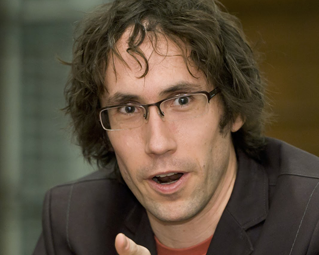
Andrzej (Andy) Skrzypacz, affiliate

Andrzej (Andy) Skrzypacz
Andrzej (Andy) Skrzypacz is the Theodore J. Kreps Professor of Economics at the Stanford Graduate School of Business. His research is in the field of microeconomics. His recent publications include papers on auction theory, bargaining, repeated games, and collusion in markets.
Skrzypacz received his Ph.D. and M.A. degrees in Economics from the University of Rochester and an M.A. degree in Economics from the Warsaw School of Economics. He is currently an associate editor for the American Economic Review, the Rand Journal of Economics and the Theoretical Economics journal. He has received a Stanford GSB PhD Distinguished Service Award and has advised over a dozen of Ph.D. dissertations.
In addition to his academic research, Skrzypacz consults clients on auction strategy and competition issues. In the recent years Skrzypacz has advised bidders in wireless spectrum auctions in U.S., Canada and Sweden. He also advised internet companies on design and competition in online auctions and communication companies on regulation issues. He is also a member of advisory board of SRECTrade an auction platform for renewable energy certificates.

Asuncion Mochon, affiliate

Asuncion Mochon
Dr. Asuncion Mochon is currently Associate Professor at the Department of Applied Economics and Economic History at UNED, Madrid, Spain. Dr. Mochon received her Ph.D. in Economics with Honors from UNED University and her degree in Economics from the Universidad Autonoma de Madrid. Her research has focused on auctions and she has written numerous articles and participated in multiples conferences on this topic. Most of her recent work, both theory and practice, has addressed questions in multiunit auctions and combinatorial auctions by means of evolutionary computation techniques and game theory analysis. She is co-founder of Auctimize and worked with Professor Paul Milgrom at Stanford University. Furthermore, she is coautor of the first book in Spanish about auctions: Mochon, A. and Saez, Y. (2011) Entendiendo las subastas.

Yago Saez, affiliate

Yago Saez

Dr. Yago Saez received the degree in computer engineering in 1999. He got his Ph.D. in Computer Science (Software Engineering) from the Universidad Politécnica de Madrid, Spain, in 2005. Nowadays, he is vice-head of the Computer Science Department from the Carlos III University of Madrid, where he got a tenure and is associate professor. He belongs to the Evolutionary Computation, Neural Networks and Artificial Intelligence research group (EVANNAI). He is involved in several competitive national research projects in collaboration with private companies and he is co-founder of Auctimize. His main research areas encompasses the evolutionary computation techniques, the Computational Economic and Finance applications and the optimization by means of meta-heuristics. He is author of a number of research articles in journals and conferences related to artificial intelligence and auctions. He was visiting scholar at the SIEPR, collaborating with Prof. Paul Milgrom at the University of Stanford (2011).

Jon Levin, affiliate

Jonathan Levin is Professor and Chair of the Department of Economics at Stanford University, and Professor by courtesy in the Graduate School of Business. His research is in the field of industrial organization, particularly the economics of contracting, organizations, and market design.

He is a Fellow of the Econometric Society and has been a Sloan Research Fellow, an NSF Career Award recipient, and winner of department and school-wide teaching awards. In 2011, he received the John Bates Clark Medal as the economist under the age of forty who has made the most significant contribution to economic thought and knowledge. He received his Ph.D. in Economics from M.I.T.

Ilya Segal, affiliate

Ilya Segal is the Roy and Betty Anderson Professor in the Humanities and Sciences at Stanford University and Professor by courtesy in the Graduate School of Business. His research is in microeconomic theory and industrial organization, particularly in the design of auctions and allocation mechanisms, property rights and investments, and multilateral contracting. He is a Fellow of the Econometric Society and has been a Sloan Research Fellow and a Guggenheim Fellow. In 2008, he received the 2008 Compass-Lexecon prize for the most significant contribution to the understanding and implementation of competition policy. He received his PhD in Economics from Harvard University

Kevin Leyton-Brown, affiliate

Kevin Leyton-Brown is an associate professor of computer science at the University of British Columbia. He holds a PhD and M.Sc. from Stanford University (2003; 2001) and a B.Sc. from McMaster University (1998). Much of his work is at the intersection of computer science and microeconomics, addressing computational problems in economic contexts and incentive issues in multiagent systems. He also studies the application of machine learning to the automated design and analysis of algorithms for solving hard computational problems. He has co-written two books, “Multiagent Systems” and “Essentials of Game Theory,” and over eighty peer-refereed technical articles, and co-taught the Coursera course “Game Theory” to over 130,000 students. With his coauthors, he has received paper awards from JAIR, ACM-EC, AAMAS and LION, and numerous medals for the portfolio-based SAT solver SATzilla at international SAT competitions (2003-12). He was program chair for the ACM Conference on Electronic Commerce (ACM-EC) in 2012, and serves as an associate editor for the Journal of Artificial Intelligence Research (JAIR), the Artificial Intelligence Journal (AIJ), and ACM Transactions on Economics and Computation. He split his 2010-11 sabbatical between Makerere University in Kampala, Uganda, and the Institute for Advanced Studies at Hebrew University in Jerusalem, Israel. He has served as a consultant for Trading Dynamics Inc., Ariba Inc., and Cariocas Inc., and was scientific advisor to Zite Inc until it was acquired by CNN in 2011.